In-Situ BioRemediation of Hydrocarbon Impacted Soil
Background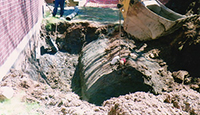
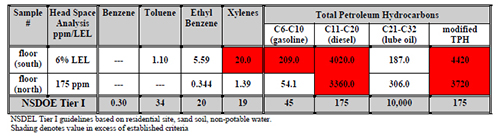
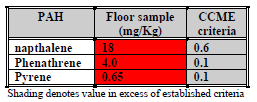
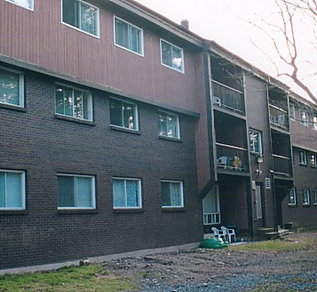
During the recovery of an underground, steel, furnace oil storage tank at a residential apartment complex, hydrocarbon impacted soil was identified. The impacted soil was characterized as sandy clay. The property is serviced by municipal water supply and there was no apparent groundwater impact. Representative soil samples were obtained and analyzed for total petroleum hydrocarbons (TPH and BTEX) and polycyclic aromatic hydrocarbons (PAH’s) and the results are summarized in the tables below.
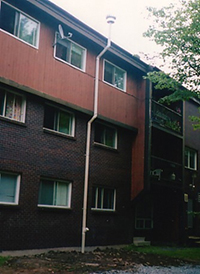
Soil Impact
The analytical data identified hydrocarbon impact, TPH and PAH, in excess of the applicable provincial and Canadian Council of Ministers of the Environment (CCME) criteria. The impacted soil was at 2.5 to 3.0 metres below grade, in the area below the former underground storage tank and adjacent to the footing of the building.
Remedial Action Plan (RAP)
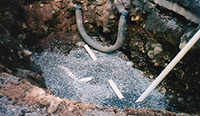
A notification report and a site-specific Remedial Action Plan (RAP), based on in-situ treatment, were prepared. This process involves the site being designated as a “managed site”, as contaminants in excess of guideline criteria are present. The RAP included the installation of a passive soil vapour extraction system (VES) and the controlled application of a custom blend of nutrients and oxygen releasing compounds to enhance the natural attenuation of the residual hydrocarbons in the soil. The plan was developed to reduce costs and disturbance to the site typically associated with the “dig and dump” approach to site remediation. The RAP was presented to the property owner and to the Department of Environment for review and approval and was initiated in September, 2000.
Monitoring
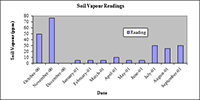 Nutrients (a blend of nitrogen rich fertilizer and oxygen releasing compound) were applied into the subsurface VES piping on a monthly basis and the progress of the remedial work was monitored using soil vapour measurements, shown on the graph to the right. Note that the initial soil vapour readings were up to 6% LEL. The readings stabilized at 25 to 30 ppm.
Compliance Testing
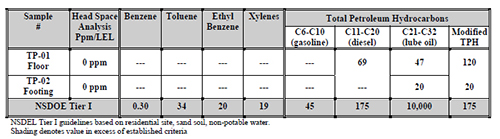
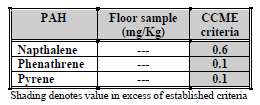
The RAP included provision for compliance testing after approximately one year. In October 2001, the impacted area was re-excavated and representative samples were obtained from the floor and east wall, adjacent to the footing of the building. The laboratory analysis of the soil samples, summarized in the tables below, did not identify TPH/BTEX and/or PAH’s in excess of the regulatory criteria.
Conclusion
Based on the results of the compliance testing, a Certificate of Compliance was prepared for submission to NSDEL. The subject property is no longer considered a “managed site”.
Hydrocarbon and PAH impacted soil was remediated on-site and in-situ, cost effectively and with minimal disruption to the area and the building occupants.
The time frame to complete the site remediation and demonstrate regulatory compliance was approximately one year.
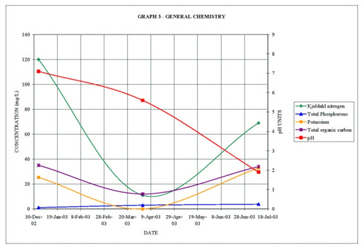 In more recent in-situ bioremediation programs, monthly monitoring has been undertaken to track the process, and make required changes to the nutrient addition program. A groundwater monitoring well is placed within the remediation zone, down gradient from the nutrient injection wells. On a monthly basis, a representative groundwater sample is obtained and delivered to an accredited laboratory for detailed analysis. Analysis includes nitrogen, phosphorous, potassium, total organic carbon and pH.
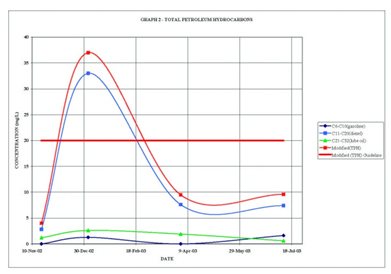 There is a direct correlation between the decrease in nitrogen (green line Graph 3 above), which is an additional food source for the hydrocarbon degrading bacteria, and the concentration of modified total petroleum hydrocarbon (TPH). As can be seen in Graph 3, the concentration of nitrogen starts at 120 mg/L in December and by April the concentration has dropped to it’s lowest level of 10 mg/L. Correspondingly the concentration of TPH (red line on Graph 2 to the right) that was initially over 35 mg/L has dropped to 9 mg/L, which is within the regulatory guidelines. The concentration of TPH remains constant for the next two months, and the concentration of nitrogen rises indicating that there is insufficient contaminant left to feed the bacteria.